
Transforming and modernizing processes for Health and Human Services Assistant Secretary for Administration (HHS ASA)
My team was contracted for design and maintenance of a Product Management Organization across HHS, but circumstances forced them to change our plan, often and significantly. We remained agile and responsive, and delivered upgrades to their budgeting, operating, and reporting processes and communications.
Role: Senior Service Designer
Responsibilities:
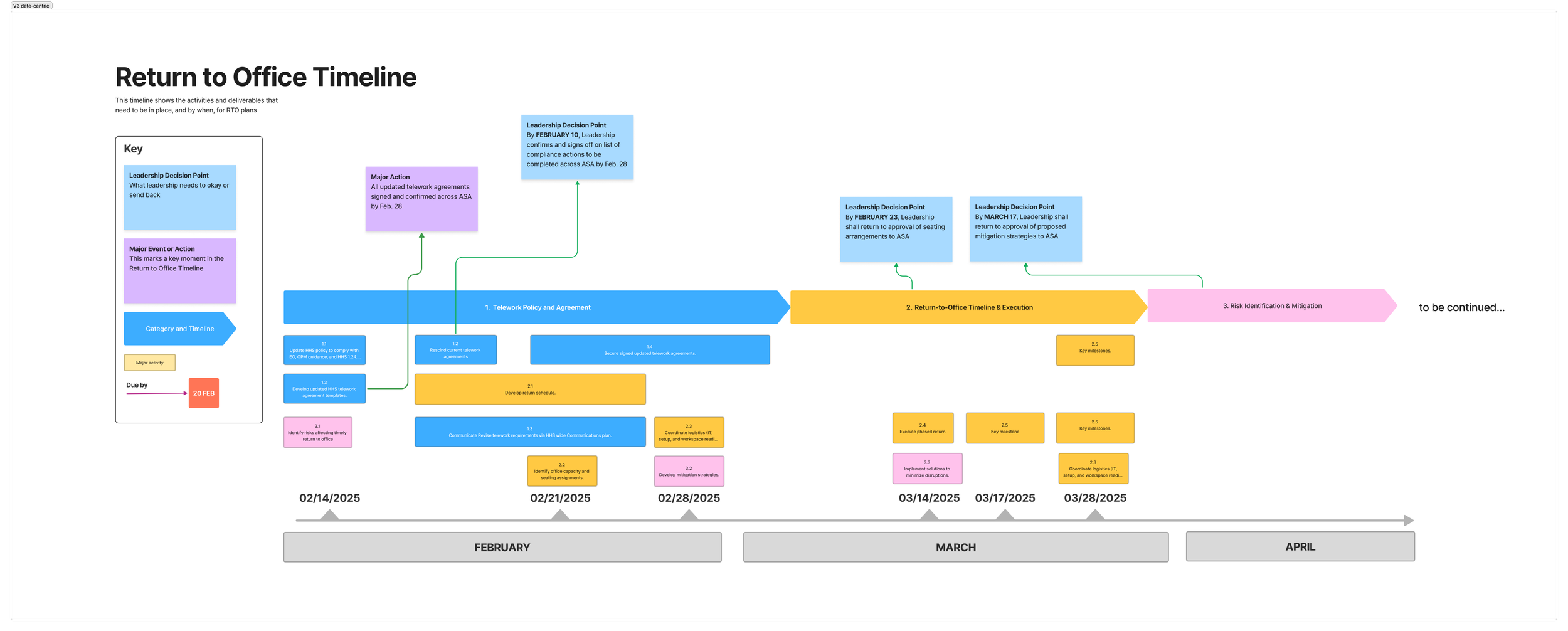
Developed actionable Executive Orders timelines
Documented and visualized complex business processes (Internal Control Metrics, budget reporting, Standard Operating Procedures)
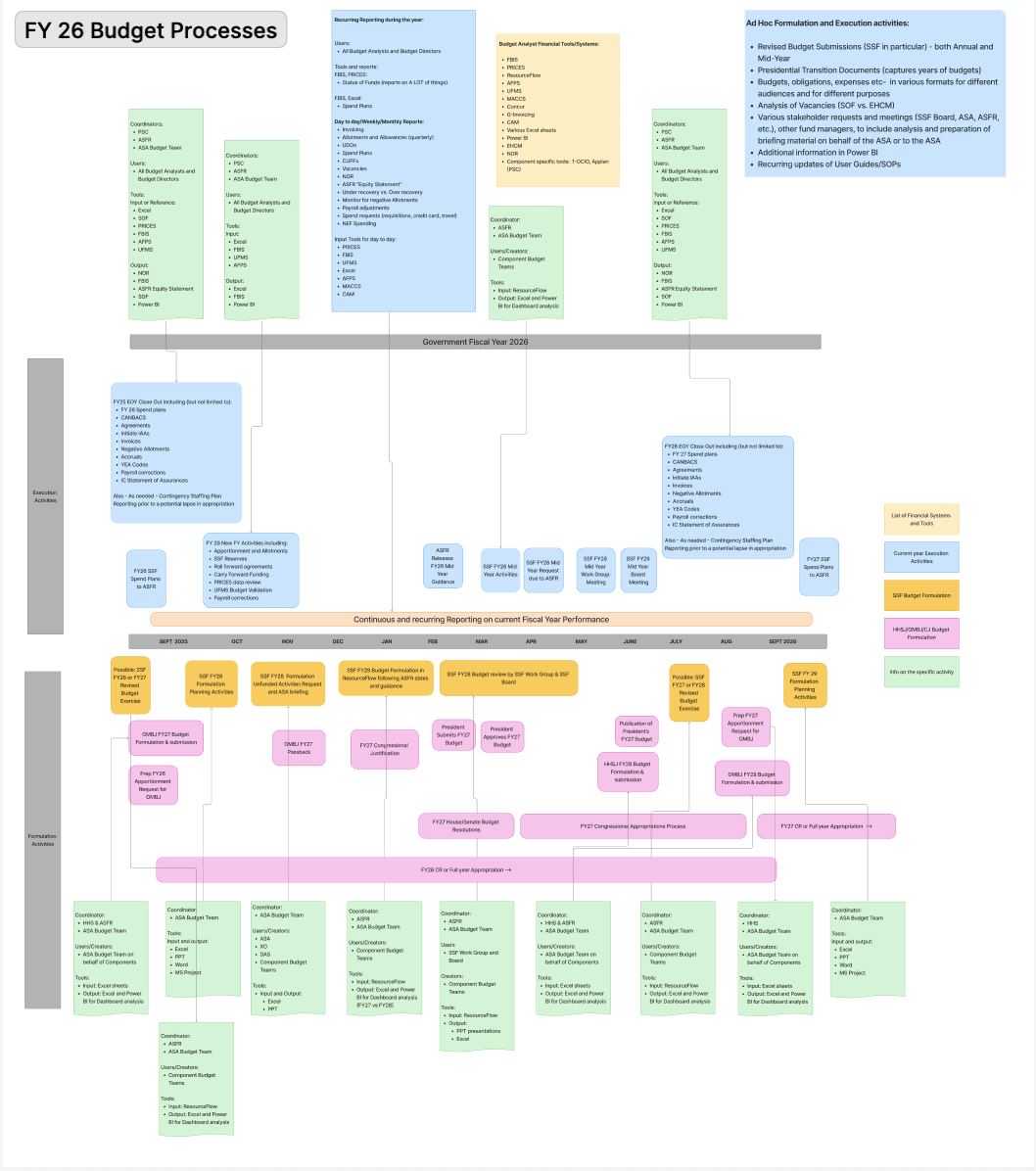
Visualized budget processes
Stayed nimble to address client priorities
Our Initial Mission
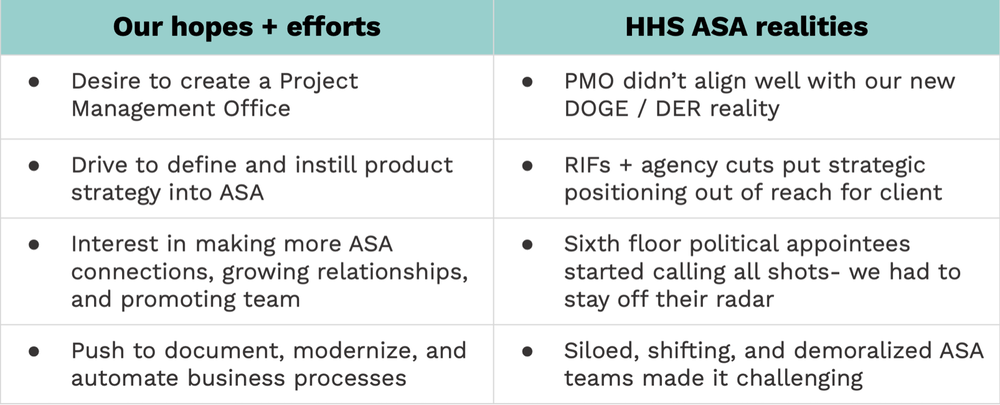
Our contract started in November 2025, but the change of administration brought with it a new set of immediate and critical priorities. Our initial PMO plan was put aside to help our stakeholders navigate new needs and challenges.
New Executive Orders (EOs), such as a mandate for government employees to return to office (RTO), required immediate and comprehensive action from the ASA, which oversees facilities and employees. These actions needed various ASA Components to work individually and together, but they did not have regular channels of communication.
How might we help ASA leadership orchestrate Components, their actions, and their communications? I worked with policy experts to unpack implications of EOs and with subject matter experts to match needed actions to Components. I then built a timeline that ASA leadership used to plan key actions and deadlines for this mandate. ASA leadership used these timelines as references across the country.
Budgeting and Reorganizing Process Modernization
For our effort to create channels and processes for more efficient and timely budget communication standards across the massive ASA. I worked with an in-team Policy Expert and stakeholders to break down the critical deadlines for budget requests and reporting, and what regulatory standards needed to be fulfilled for each. I then mapped these out on a fiscal year calendar, along with which systems would be engaged for data collection and reporting.
This led to us creating the first existing guidance for components across HHS ASA. In turn, we saw, by and large, offices within the ASA reporting efficiencies in their quarterly planning, Leadership and stakeholders across HHS ASA responded positively to this change.
As similar process also expedited my work on mapping how leadership’s goals of reorganization might be seen by components within ASA. Again, working with a policy expert helped me unpack terms and relationships that were often understood but undefined. As a result, we were able to build guidance for both HHS ASA at large and for individual teams about what steps (data collection, reporting structure, etc.) they’d need to plan for.


The Assistant Secretary for Administration (ASA) within the Health and Human Services (HHS) agency is responsible for managing human resources, budgeting, facilities, and practices across HHS. It’s a massive undertaking, with hundreds of offices across the country and a client base of all residents of the US.
The client contracted for design and maintenance of a Product Management Organization across HHS, but circumstances forced them to change their ask, often and significantly. We remained agile and responsive, and delivered upgrades to their processes and communications.
Standard Operating Procedure (SOP) Modernization
HHS ASA had historically relied on SOP documents for training, archiving process knowledge, and training up people across the agency. But the documentation had not been revised in years, and never checked across the corpus. How might we help update the documentation?
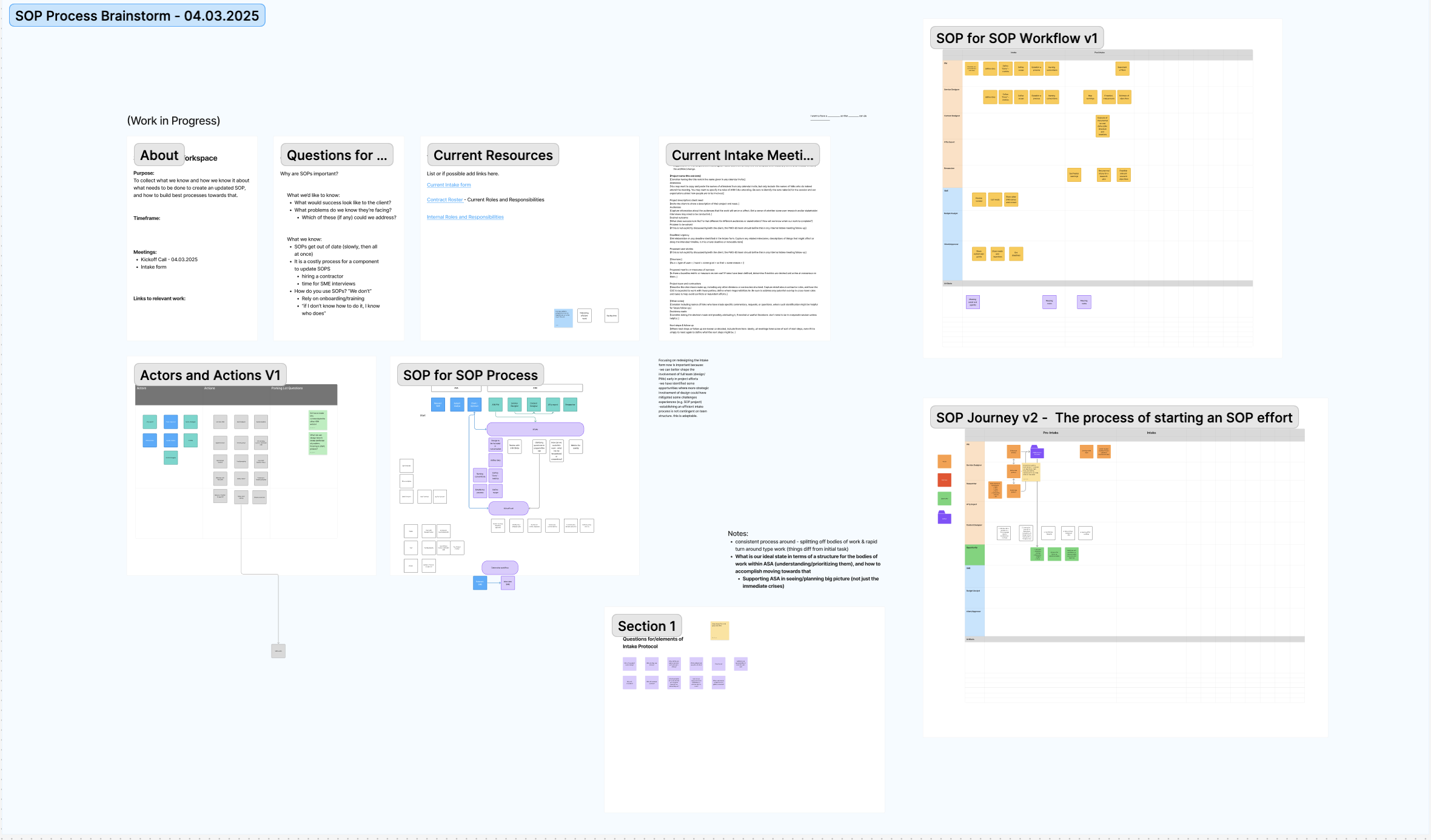
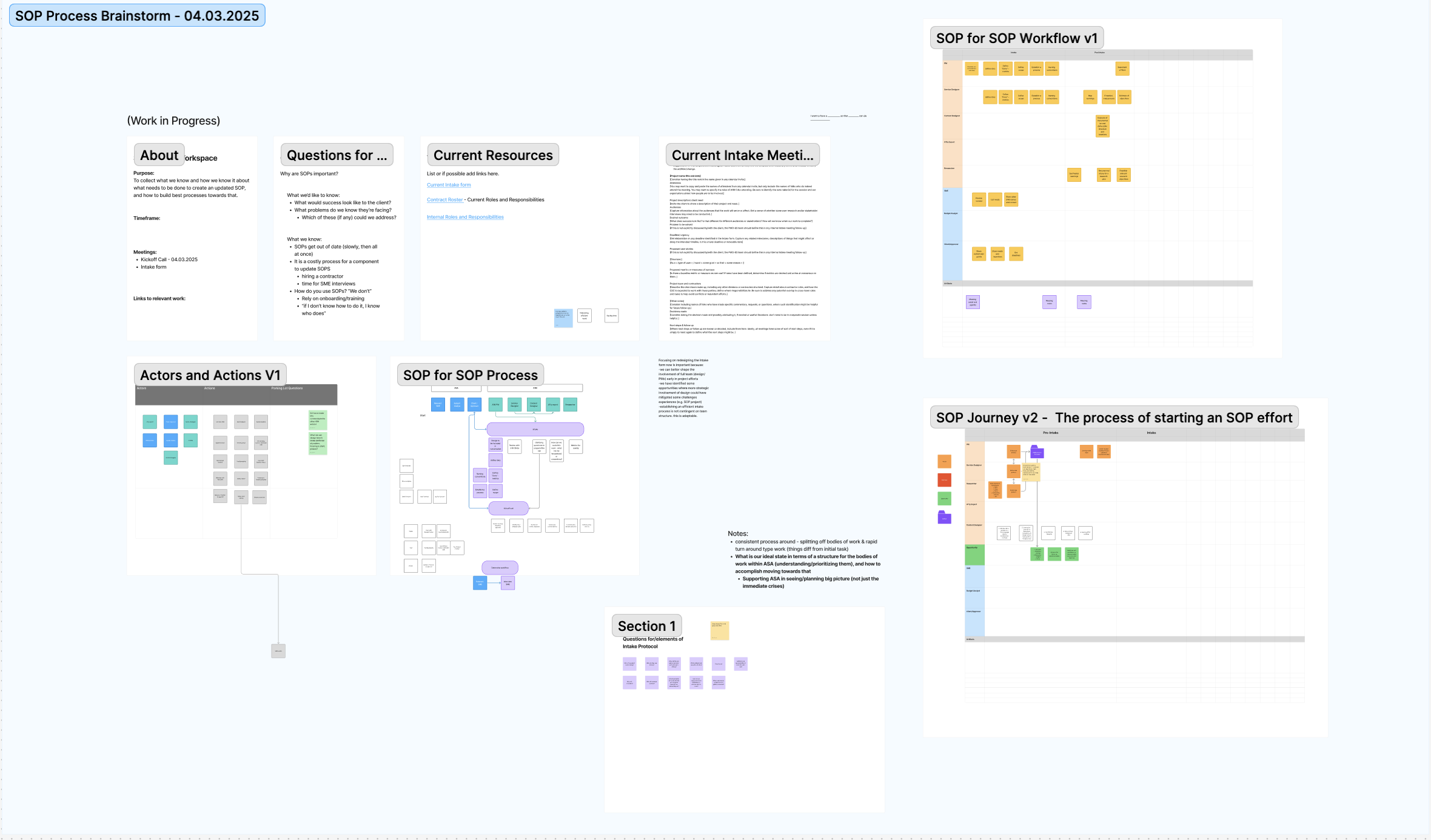
My first action was to work with our stakeholders and subject matter experts (SMEs). I facilitated a brainstorming session to uncover and share what was known about SOPs: how they were used, by whom, when, how they were written, how they were organized and found by those who needed them (top image). (I later also drew on accessibility experts to ensure that our new versions exceeded 508c standards.)
From this, we learned who the actors were in the SOP creation and distribution process, and that the current model of organizing and storing SOPs left a huge burden on the user to locate documents that were relevant to their work. It also allowed us to start co-creating a process by which we could overhaul the current system and make it more user-friendly.
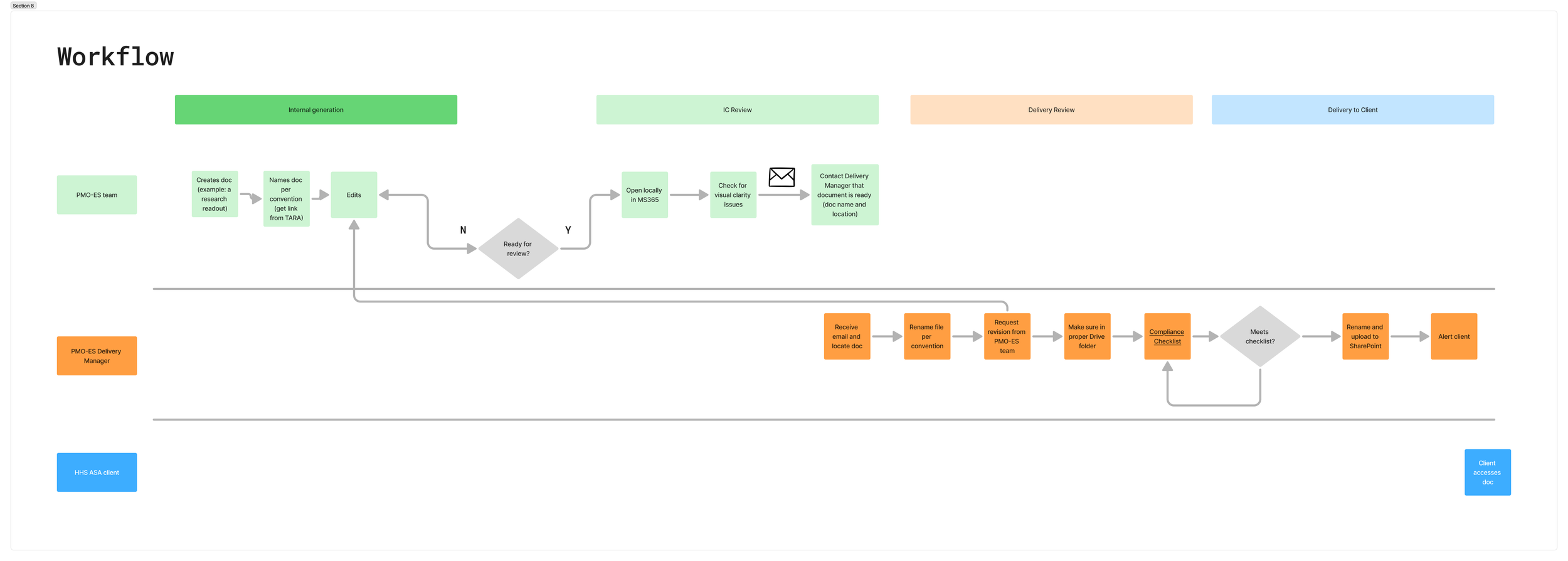
I also mapped out a process for continual monitoring and revision of SOPs, so that ASA would not face a massive need to overhaul out-of-date documentation (middle image).
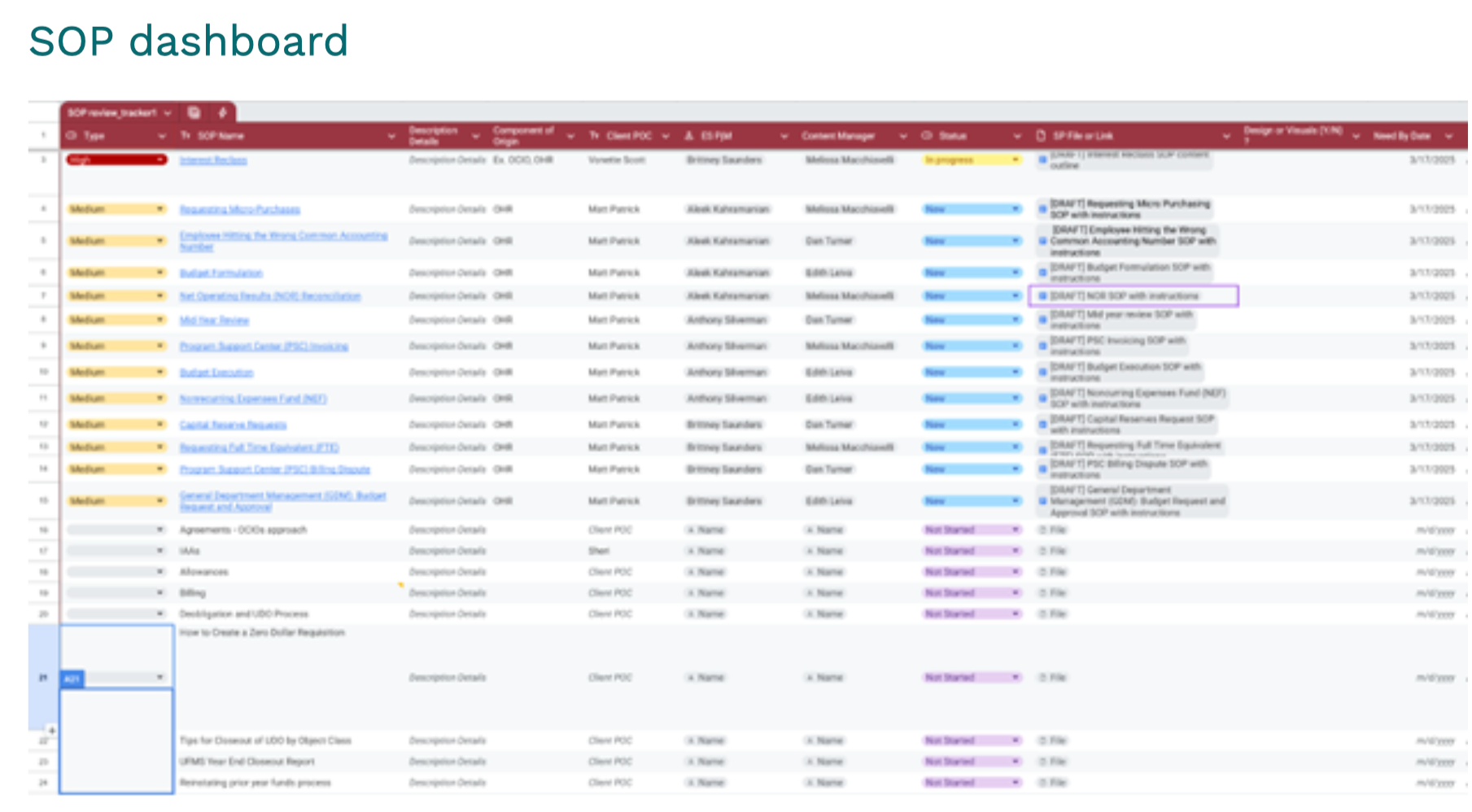
To help us prep ASA for building a better system for the IA of SOPs, I worked with a SME to create a dashboard that captured the subject, related processes, departments, technologies, and “freshness” (when it was last revised) of existing SOPs (bottom image).
This helped us to prioritize our SOP revisions and track documents, which we planned to keep as an ongoing resource for ASA, offering searchable/browsable metadata on which we could build an interface for easier user discovery.
Unfortunately, priorities at ASA suddenly changed, and we responded.
Client and Stakeholder Feedback
Pretty positive!
As a team and as individuals, we were proud that we were able to build trust and help our stakeholders achieve a good deal in stressful times.