Creating an Effective Process for VA Forms Digitization
Digitizing a single VA form was taking teams three to nine months, which led to delays in delivering services and care for Veterans.
I led Ad Hoc’s Service Design Team’s creation and delivery of the first-ever roadmap for delivering VA forms into accessible, digital, mobile-first versions. Our close work in understanding developer needs and pain points helped teams cut delivery by one to three months and improved health, financial, and recovery care.
Role: Senior Service Designer
Incorporated user research methodologies to facilitate discovery sessions with stakeholders and VFS teams
Synthesized findings
Built journey maps and service blueprints
Built partnerships with critical developer teams and stakeholders
Mapped pain points and best practices
Presented insights and recommendations
Proposed and built process documentation
The Guide to Digitizing VA Forms is still a living, foundational resource for ongoing work
Responsibilities:
Teams were struggling to digitize VA forms. How might we reduce time to delivery?
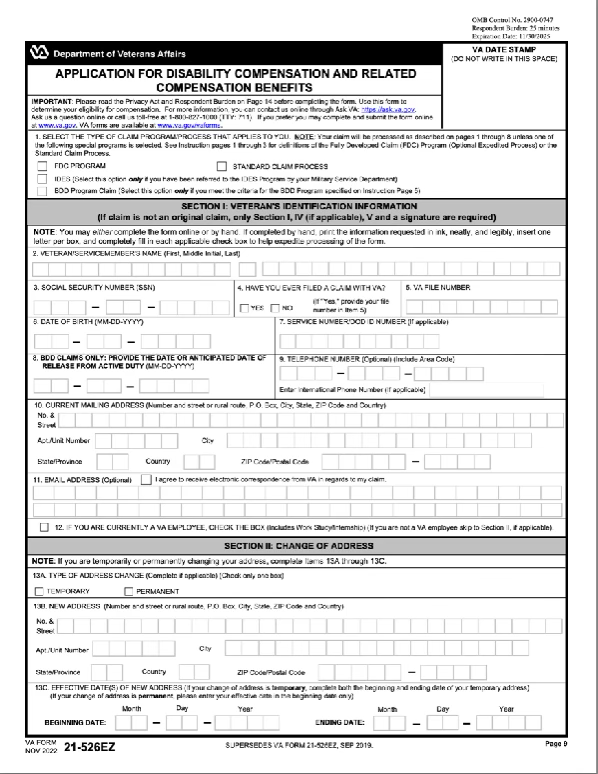
The primary way Veterans and the VA interact is through forms. This is how Veterans and their families access care and benefits. But the current state of forms (downloadable PDFs) was burdensome for those without computers, or printers, or with vision or cognitive issues. To help with this, the VA undertook a massive effort to create digital, accessible, and mobile-first versions..
But it was taking developer teams three to nine months to deliver a single, finalized product. How might we learn what the developer teams were facing and see how we might design a better workflow and system for them, thus reducing time to delivery and, as a result, improving outcomes for Veterans?
Towards this, I drew on my background in user research, information architecture, collaboration across teams and disciplines, and service design, to tackle this pressing problem.
Understanding hurdles and wins at the developer level
Dozens of VFS teams were working on digitization, but in isolation. I led my team in the first discovery of how individual teams were facing the challenges they encountered (successfully or otherwise).
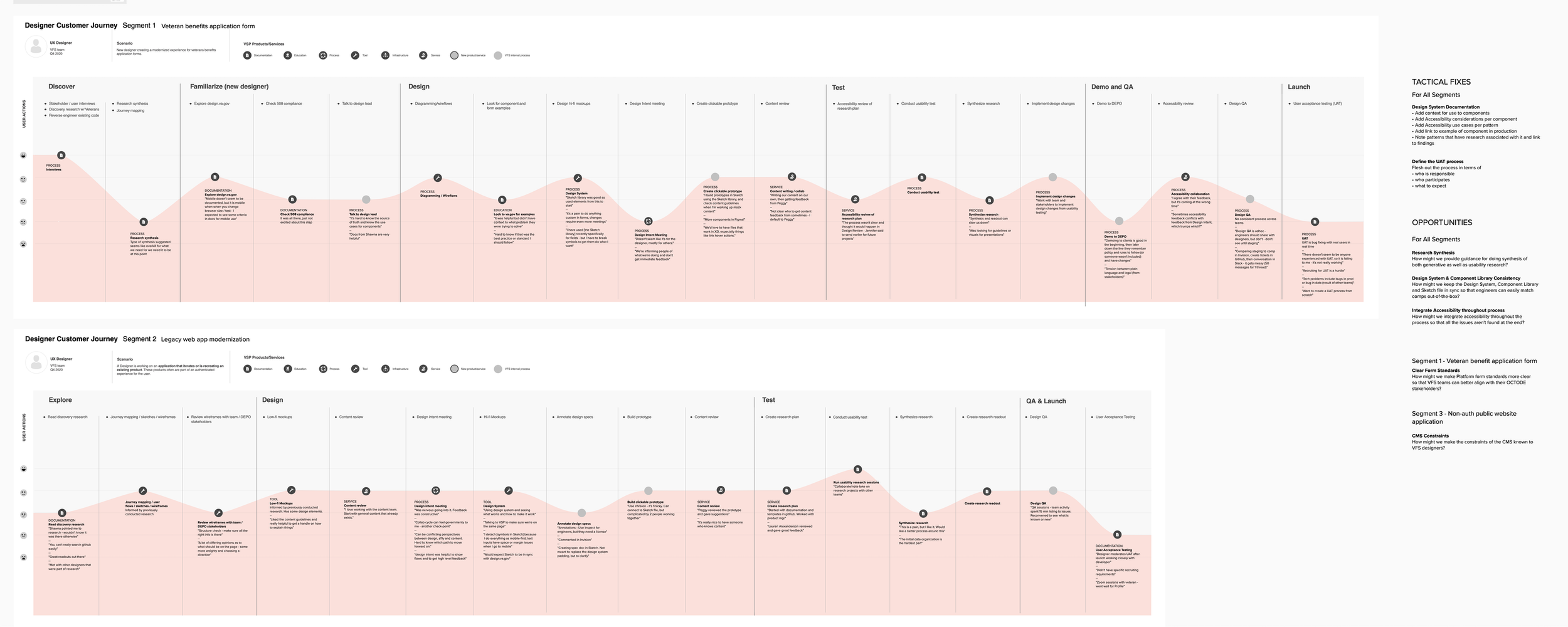
With the help of my team’s UX Researcher, I led co-discovery workshops (first image) at a sprint cadence, recruiting from digitizing teams at different levels of experience and progress. This helped us learn where they encountered frustrations with requirements for quality control checkpoints, communicating with Form Owners at the VA, and technical hurdles. We learned that many frustrations came from working in silos (each team was having to solve similar problems) or lack of domain expertise (such as the capacity to collaborate with VA reps).
I was able to build out maps that showed these issues as well as processes each team had created to face them.
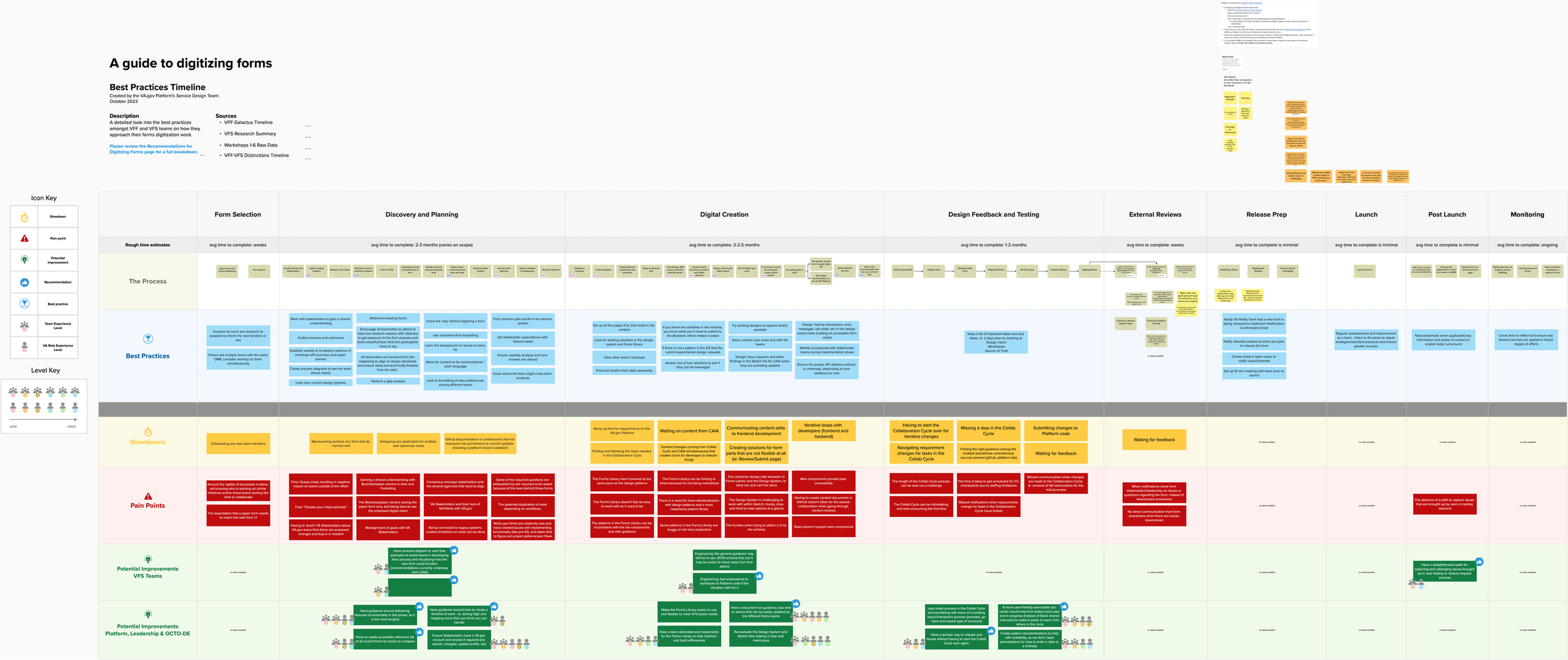
We also mapped out what artifacts teams needed to have and to produce, and critical communications with other teams (service blueprints), team-specific pain points, and the developer team journey from kickoff to delivery (second image).
These led me to understand better where an individual team struggled due to lack of shared knowledge, where experienced teams ran into blockers where we could recommend unblocking changes to the review gateways, and where common technical issues could be referred to backend teams.
Synthesizing end-to-end experiences across teams
Working with my team, we synthesized our individual team findings into one complete service blueprint that showed not just the developer team’s journey but also the interaction points and deadlines with other actors in the system. This included extensive collaboration with the Governance Team, a cross-project group what oversaw technical, design, and accessibility QA. The blueprint also collected and compiled both common and unique pain points for the developer team, as well as opportunities for optimizations and best practices (for example, if one team had built a reliable access tool for common data streams, or a protocol for speeding accessibility work).
I helped present these findings to both leadership on the contract and back to the participating developer teams. We received enthusiastic feedback, but we realized there was one more problem.
Delivering reduced-friction processes for developers, in a format developers prefer
How should we communicate our insights and recommendations to these teams? Developers and PMs need something they can refer to for planning during a long project, and detailed steps and tips.
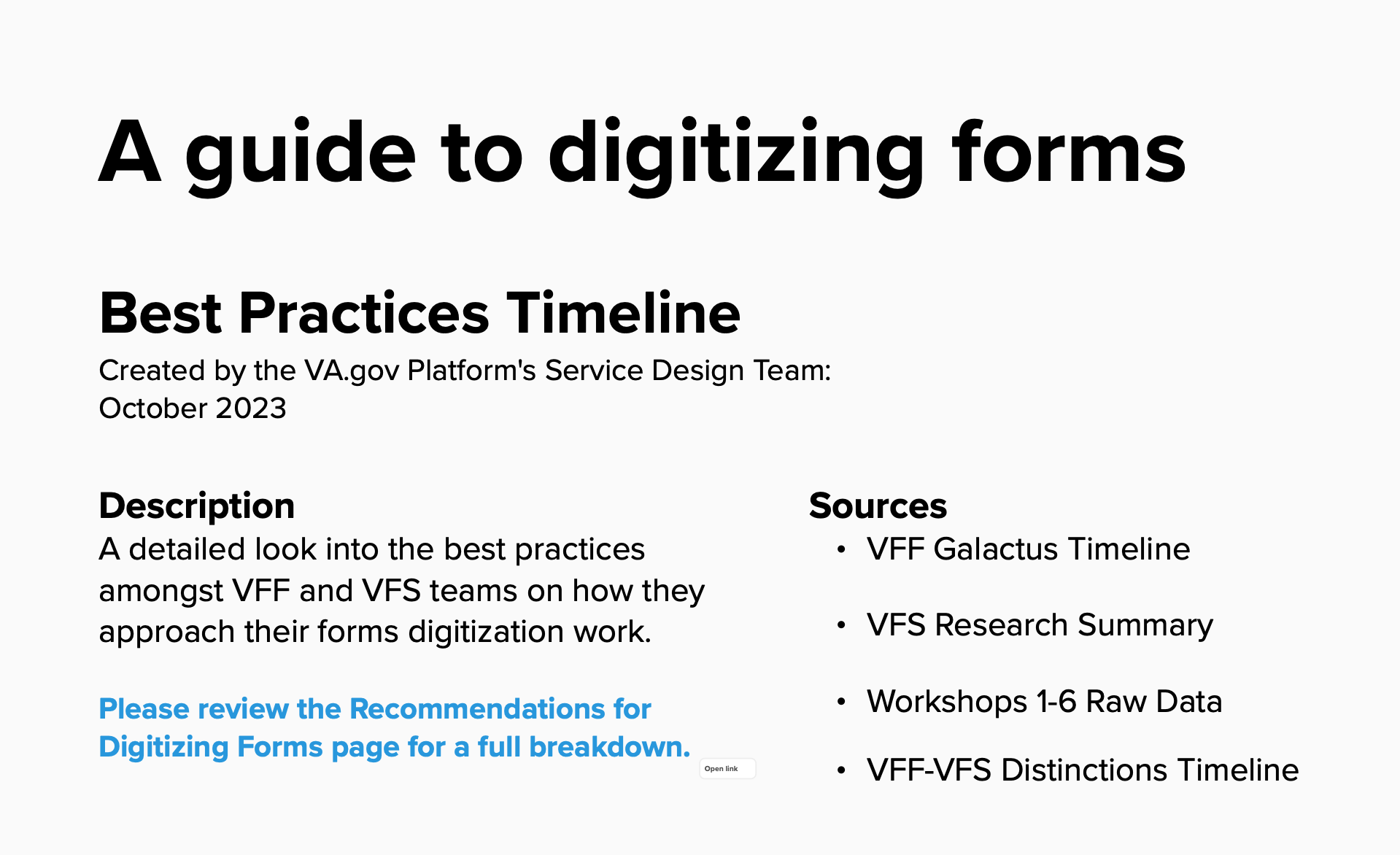
Interviews and desk research showed these teams relied on Confluence for documentation and guidance. So I proposed we build A Guide to Digitizing VA Forms (first image) using plain language and a how-to structure.
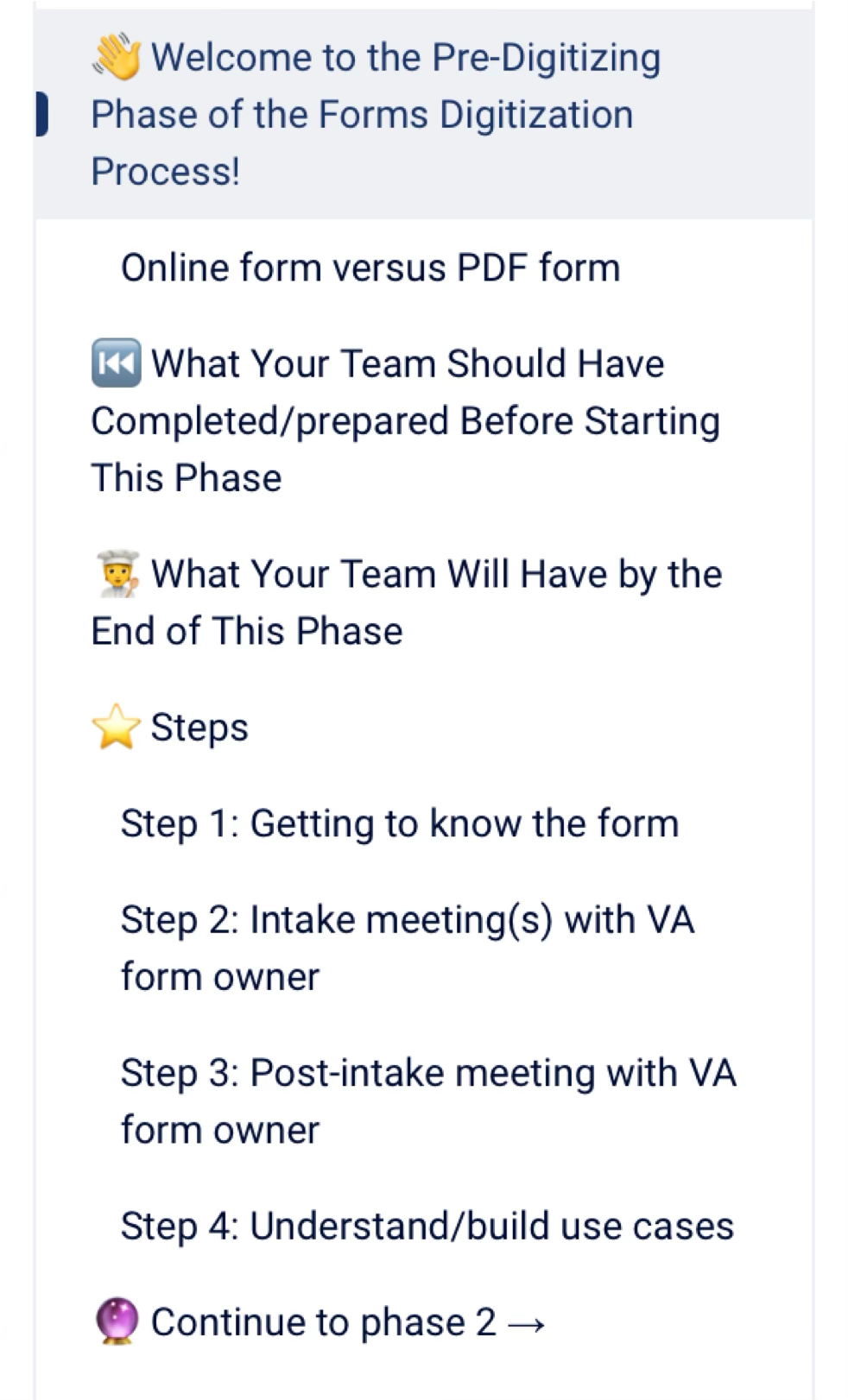
Feedback from teams included praise for breaking the process into phases (lower image) and noting what artifacts teams should have before starting a new phase, as well as what they could expect to have at the end of each phase.
We estimated that this would reduce the average time to delivery of digitized forms by one to three months per each form.
We quickly saw that this gain was realized, representing a major savings of time and expense of up to 33% in realizing the VA’s goal.