
Bringing users and stakeholders into the process through facilitation
I bring experience in effective and mindful facilitation across the lifecycle of a design project. From kickoff to co-design to outcomes discussion, I try to provide meaningful structure, empowerment, and surfacing systems to sessions.
With the remit of “how might we reduce delivery time of digitized VA forms”, the critical question was, “what are teams currently doing and how might we help?”
I worked with my team’s UX Researcher to identify and schedule workshops with teams working on form digitization. We were sure to include a range of team maturity, from newly formed teams to teams that had completed at least one delivery.
I structured the sessions as co-discovery, where I presented open-ended questions, probes (open-ended follow-ups), and led the teams through affinity mapping and journey mapping activities. I helped them identify and name pain points, and where the current processes and documentation created design or technical debt or required repeated attempts.
This allowed us to see that siloed teams were encountering common blockers or pain points, and also that the dev-centered construction of the teams were leaving them with some knowledge gaps that slowed their time to delivery. For the path to solution. please see the full case study about digitizing VA forms.
VA Forms and co-discovery sessions
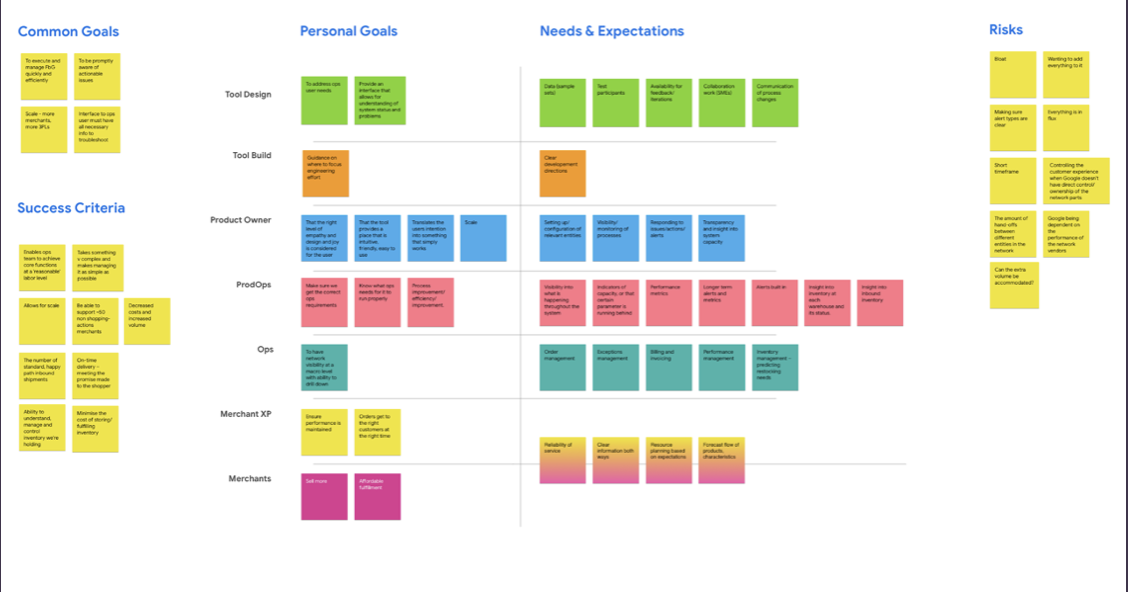
At the design agency Potato LLC, I and my team’s Product Owner designed the agenda for and facilitated the stakeholder kickoff. We created a group exercise to uncover goals, needs, expectations, and risks. This helped us build our Statement of Work and gave us a starting point for our research sprints.
Later, after our initial research findings, we ran this workshop again. This helped our team present our revised plan of attack for the project and update our client’s expectations, which eliminated friction with our changes.
Kickoff meetings as alignment tools
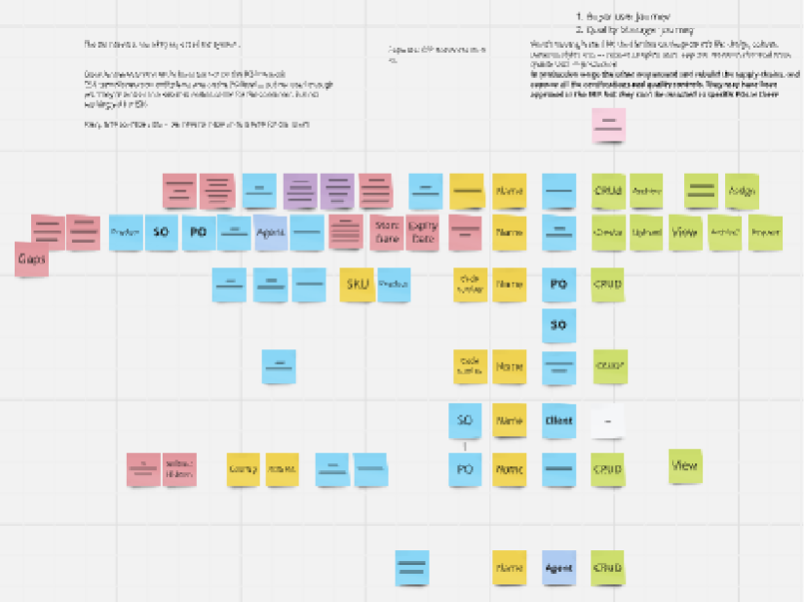
Also at Potato LLC, I prepared and facilitated paper prototyping sessions with both users and our stakeholders. The team’s research and my service design and information architecture work had led us to propose a new type of interface centered around objects and attributes, with the idea that this would help users reduce information overload and surface issues and mitigating actions.
This helped us learn more about the users’ mental models and day-to-day burdens, which enabled us to iterate our prototypes into versions that proved better in usability testing. It also demonstrated to stakeholders why the former interface model was cumbersome and how our proposal could be more effective for its users and improve customer satisfaction (top image).
My experience with tactile prototyping goes back to early work I did at HIIT.fi, where this practice helped me understand the needs and behaviors of users on WEP-enabled phones. This helped me design more easily accessed and understood pages for a voting advice application in emerging democracies in Africa (bottom image).
Co-design with users and stakeholders

