
Creating an Effective Process for VA Forms Digitization
Digitizing a single VA form was taking teams three to nine months, which led to delays in delivering services and care for Veterans.
I led Ad Hoc’s Service Design Team’s creation and delivery of the first-ever roadmap for delivering VA forms into accessible, digital, mobile-first versions.
The result was that teams cut time to delivery by months improving health, financial, and recovery outcomes.
Responsibilities
Incorporated user research methodologies to facilitate discovery sessions with stakeholders and VFS teams
Synthesized findings
Built journey maps and service blueprints
Built partnerships with critical teams and stakeholders
Mapped pain points and best practices
Presented insights and recommendations
Proposed and built process documentation
The Guide to Digitizing VA Forms is still a living, foundational resource for ongoing work
Teams were struggling to digitize VA forms. How might we reduce time to delivery?
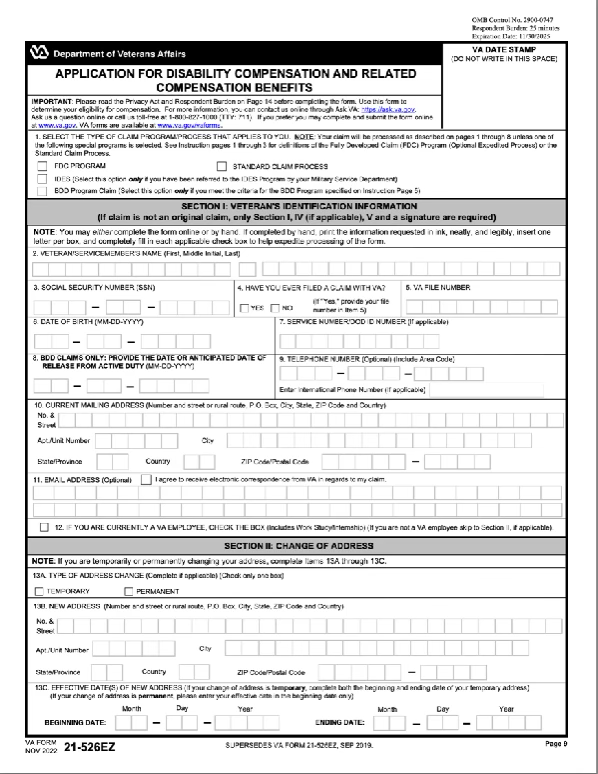
The primary way Veterans and the VA interact is through forms. This is how Veterans and their families access care and benefits. But the current state of forms (downloadable PDFs) was burdensome for those without computers, or printers, or with vision or cognitive issues. To help with this, the VA undertook a massive effort to create digital, accessible, and mobile-first versions..
But it was taking teams three to nine months to deliver a single, finalized product. Veteran outcomes were suffering due to this. How might we reduce time to delivery and, as a result, improve outcomes?
Towards this, I drew on my background in user research, information architecture, working across teams and disciplines, and service design, to tackle this pressing problem.
Bringing User Research to Inform Design Roadmaps and Center User Needs
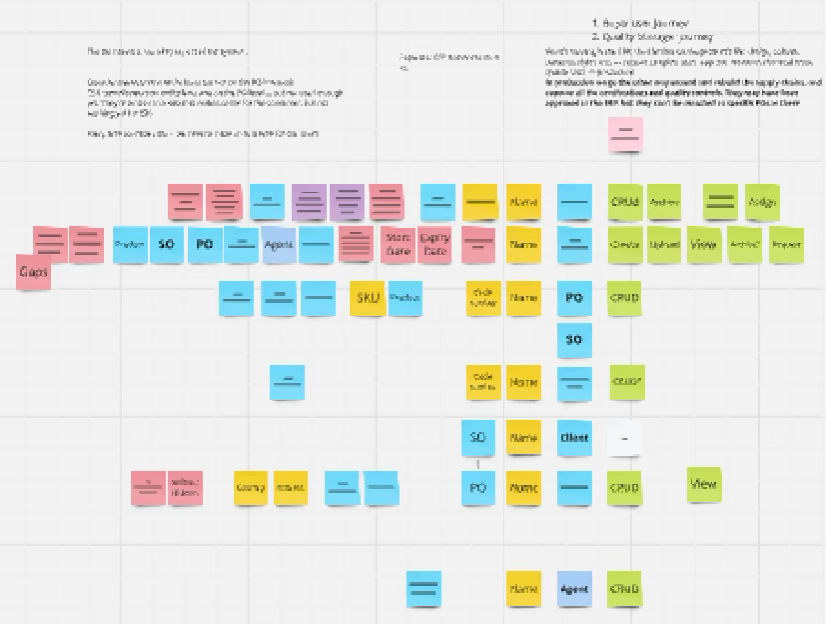
Bringing my own UXR background and working with a researcher teammate, I recruited teams across a range of maturity levels and built protocols for co-discovery sessions. In these, we created virtual spaces and, using open-ended questions, helped these teams surface their processes, assumptions, where they had to solve process problems, what solutions they came up with, and when and how they encountered pain points.
Training teams in affinity mapping not only paid off in the course of these sessions, but gave them a new tool to work more efficiently; teams reported back that they internally ran similar sessions to help problem-solve.
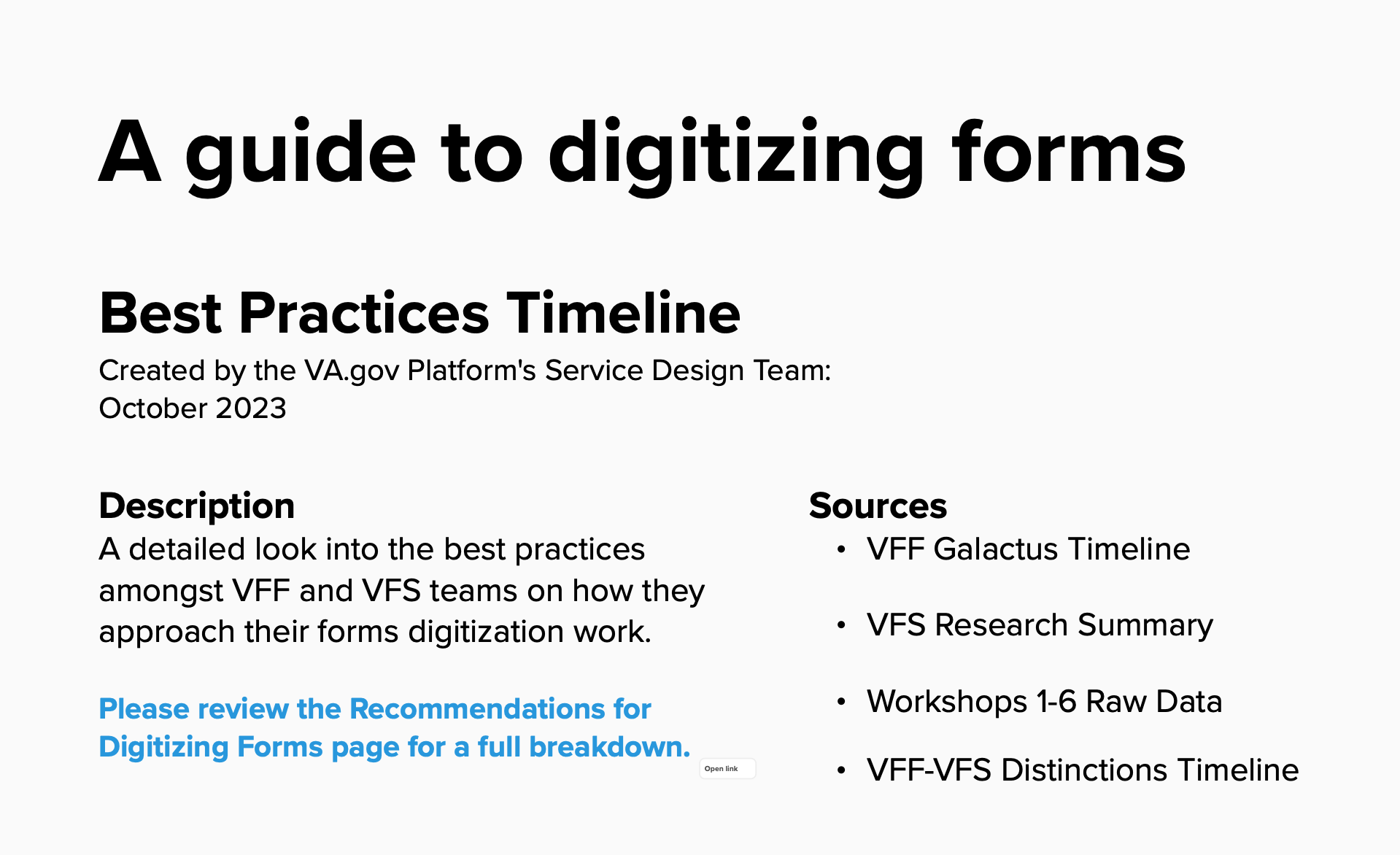
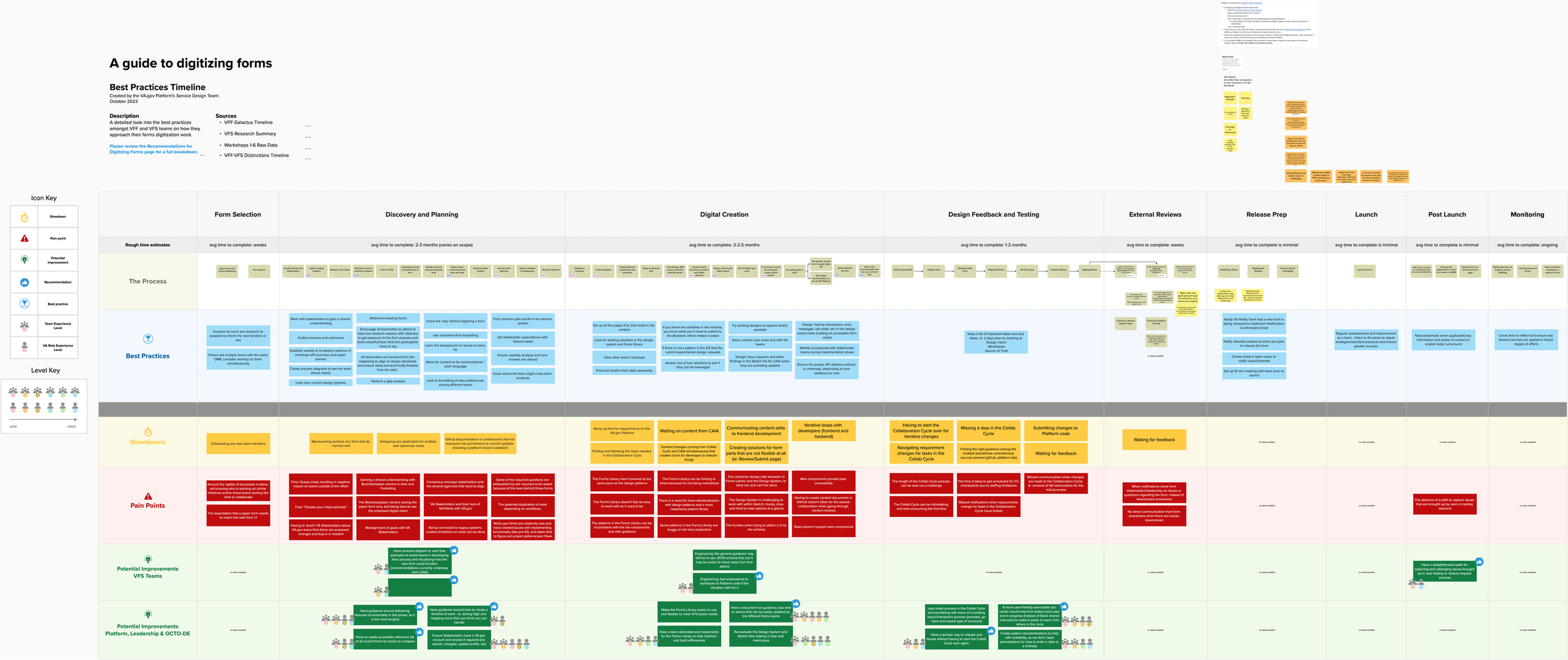
This eventually enabled us to create the Guide to Digitizing VA Forms (bottom image). See the full case study.
Synthesizing Research Data to Drive Service Design
I was able to build out journey maps that showed what issues had proved problematic for each team, as well as processes each team had created to face them.
I also worked with my team’s PM and another service designer to map out what artifacts teams needed to have and to produce, and critical communications with other teams, team-specific pain points, and team-specific best practices.
This allowed us to see how teams interacted with critical actors and touchpoints, what blockers they faced, how they solved them, and also that some of these blockers were common across teams. This taught us that these teams were siloed, and that they were forced at times to reinvent the wheel.
This, in turn, suggested that one slowdown to delivery was the lack of shared process and expertise across teams.
Synthesizing Complex Systems to Make Sense and Find Meaning and Actions
The next step was co-leading my team to take the discovery from a range of teams and create sense and coherence in both current-state and ideal-state communications to leadership.
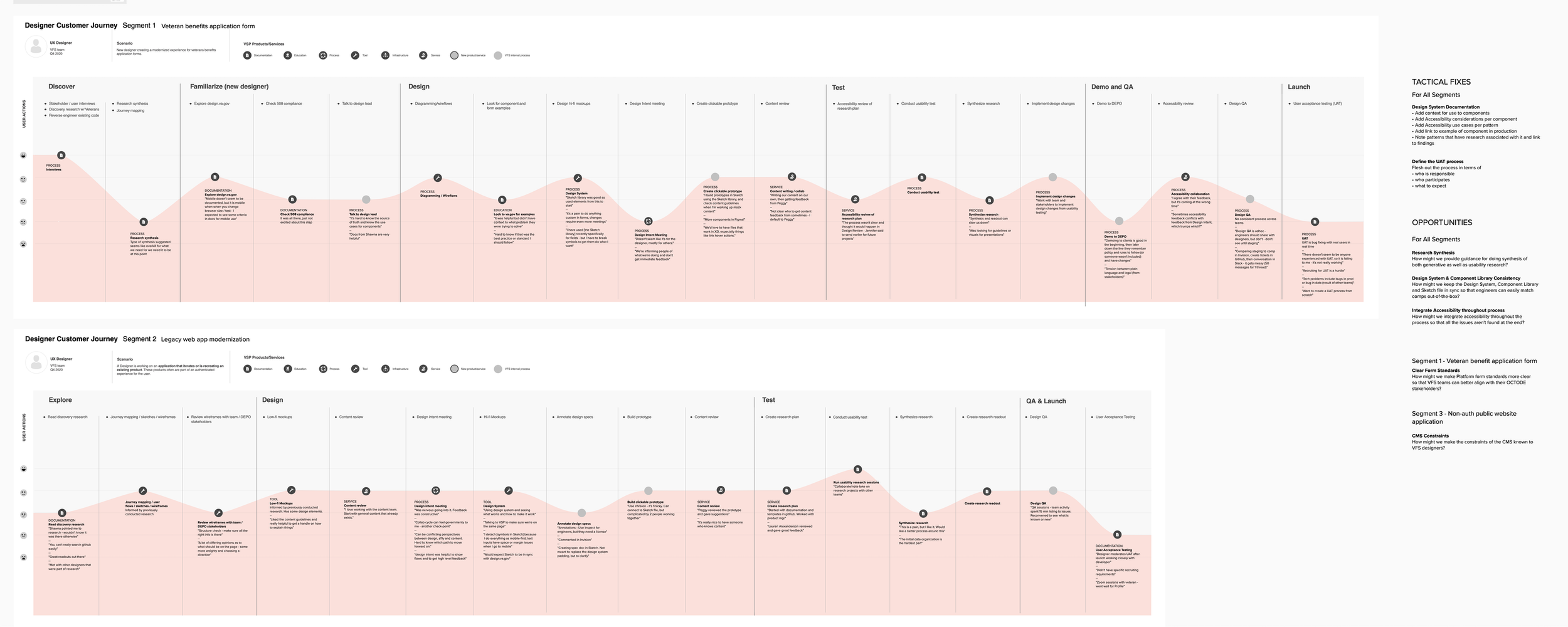
Working with a UX researcher, I collected insights and discoveries from workshops with teams to map out their pain points, mitigating strategies, and best practices to move through a governance process.
To test our assumptions and help us create a more useful and relevant Guide, we tracked customer journeys in using certain VA forms.
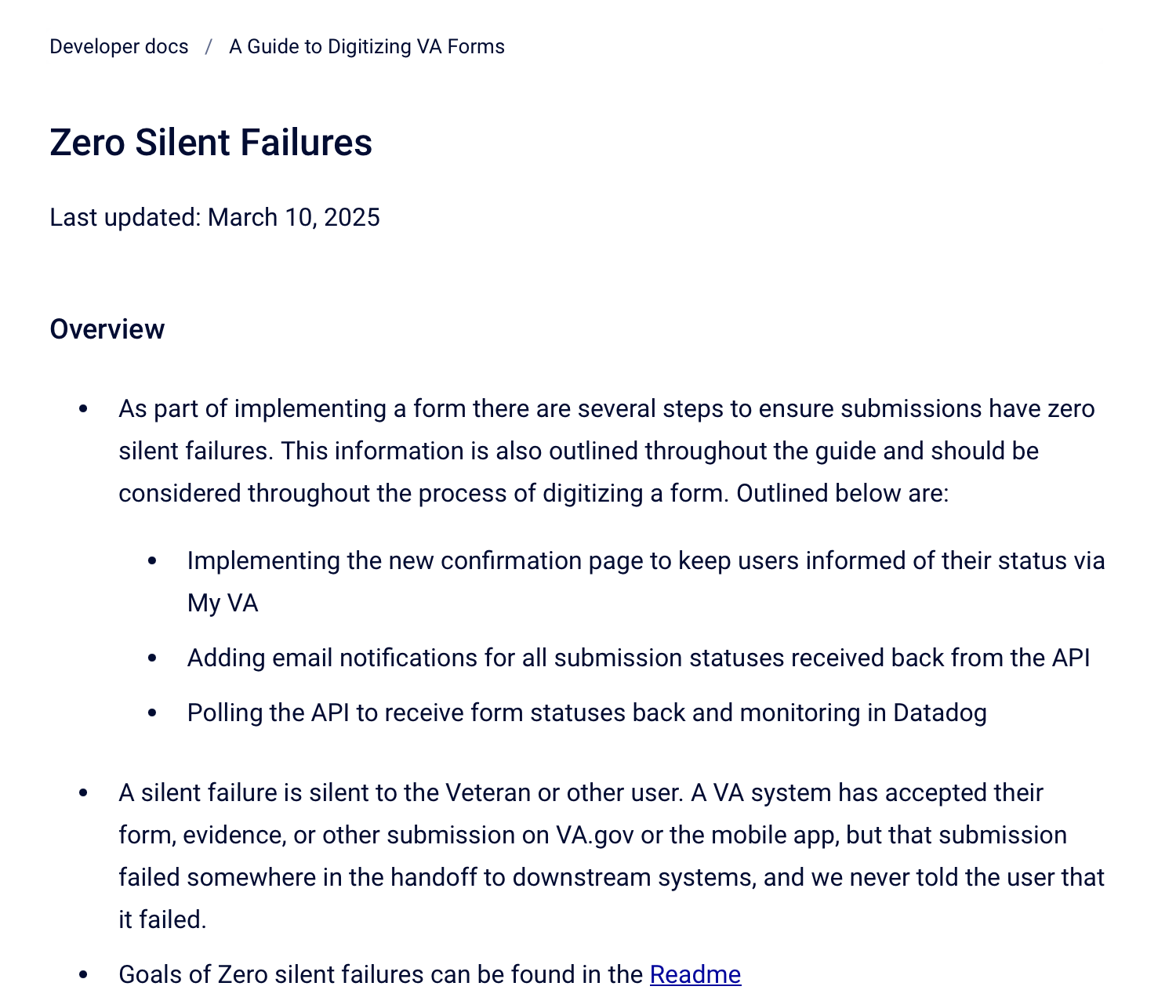
The VA continues to use our work as a platform, building out new sections to help address Congressional priorities. Recently, the current team, based on our work, helped eliminate silent failures in the VA forms system.