Service Design
Seeing in systems can be a superpower. It uncovers incentive structures, leverages research to look across silos, de-risks, and makes complex systems more efficient and modern. For years I’ve helped teams, products, and services tackle complexity and ambiguity, modernize systems and processes, and produce better outcomes.
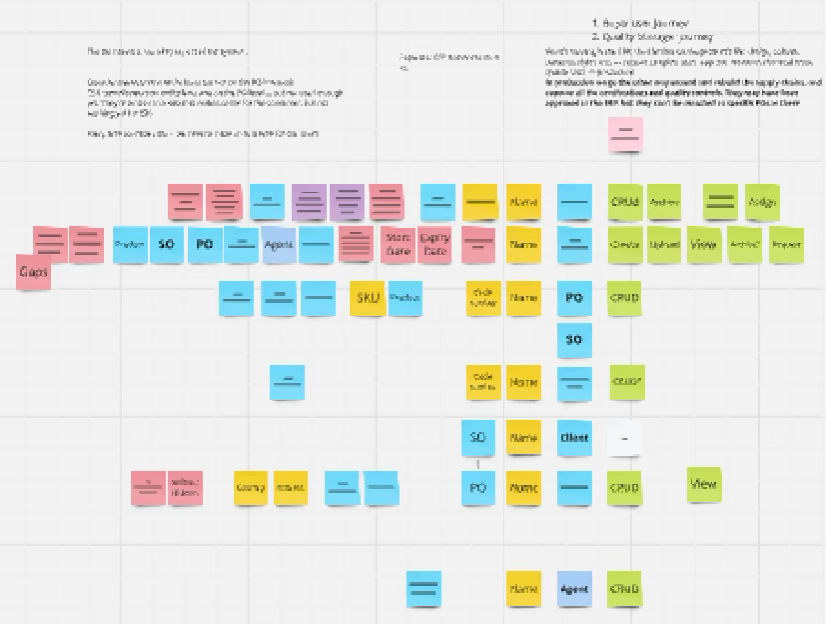
As a co-founder of the Service Design Team at Ad Hoc, working on the problem of digitizing VA forms, I worked closely with my team’s User Researcher to recognize what teams to include and how in our co-discovery sessions (top image).
These sessions, which included facilitated brainstorming and affinity mapping, provided solid data that allowed me to set the next steps of our work.
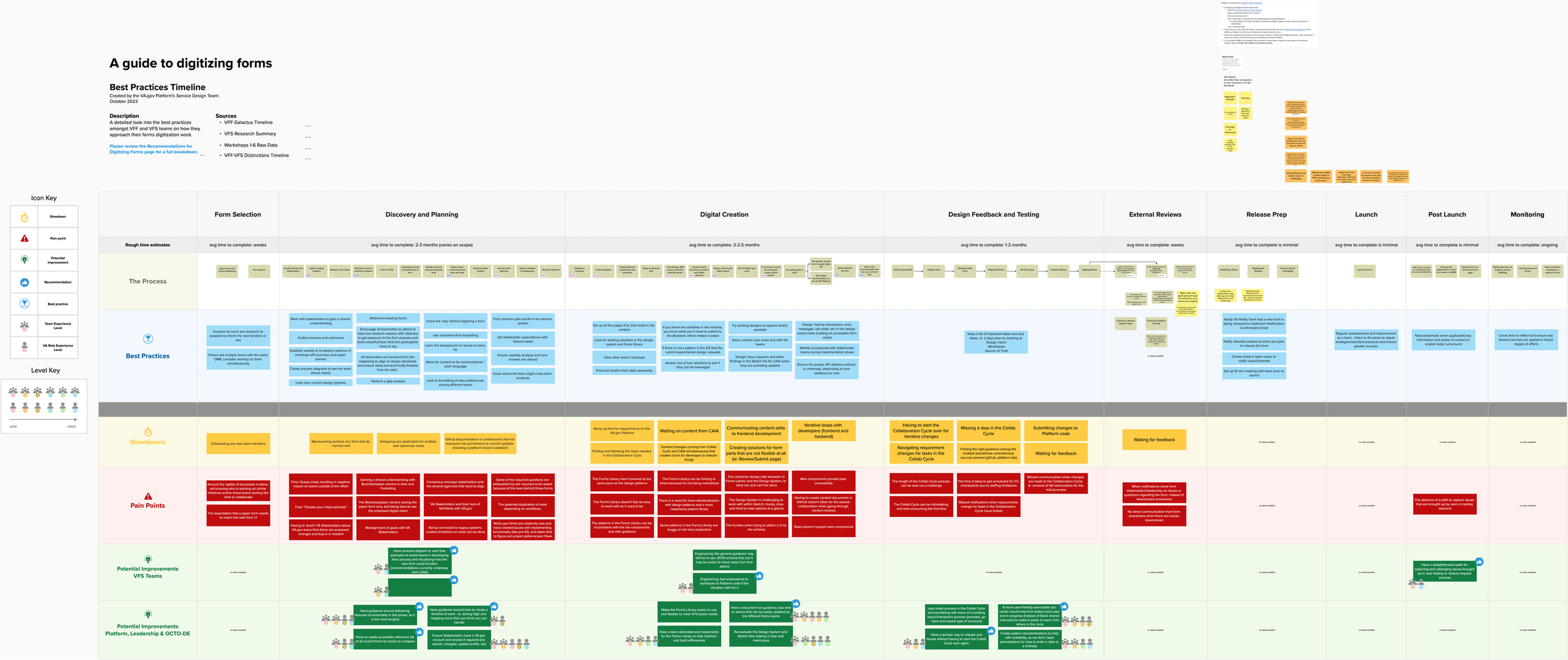
This research uncovered the pain points, innovative solutions, gateways, and actors in the system affecting the digitization work In turn, this allowed me to collate the siloed team experiences and build an ideal state service blueprint for the months-long process (middle image). We then adapted that into the still-in-use Guide to Digitizing VA Forms.
Working together for better discovery
I thrive when diving into complex, often ambiguous systems of processes, people, incentives, and constraints, and producing clarity and actionable insights. This has proven useful when working on public-sector and private-industry projects alike.
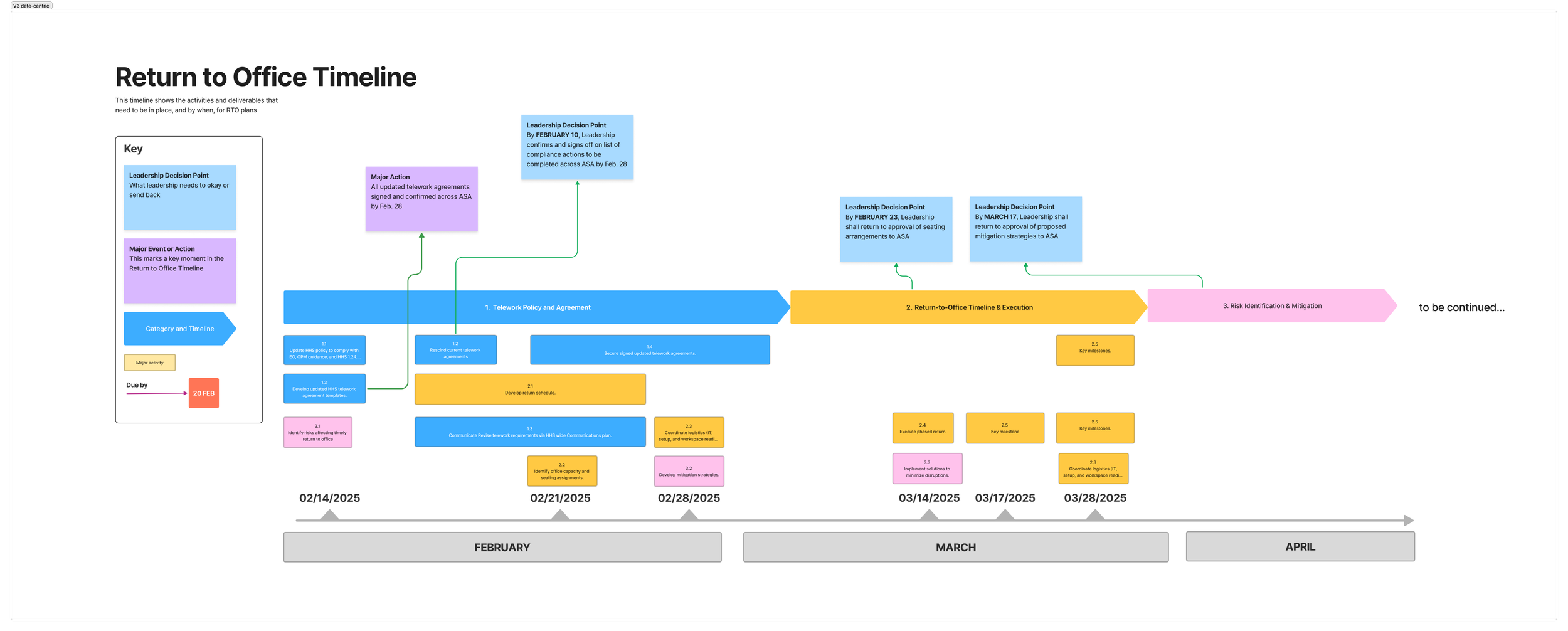
In my work as a Senior Service Designer on contract with HHS ASA, I and my team faced a range of high-intensity, short-deadline asks from our stakeholders, as the change of administration manifested new needs and new work to meet Executive Orders (EOs)..
One of these was an order that all HHS ASA workers should return to office (RTO) on a tight deadline. What needed to happen, by whom, and in what order, was information locked up inside the heads of many siloed departments.
I worked with the stakeholders and Policy Experts at my company to dig out the departments involved in each stage, their constraints, and their channels of communication with other departments. As a result, I was able to deliver to HHS ASA leadership simple, coherent, timely, and actionable timelines (top image) that helped the agency comply with all the EOs.
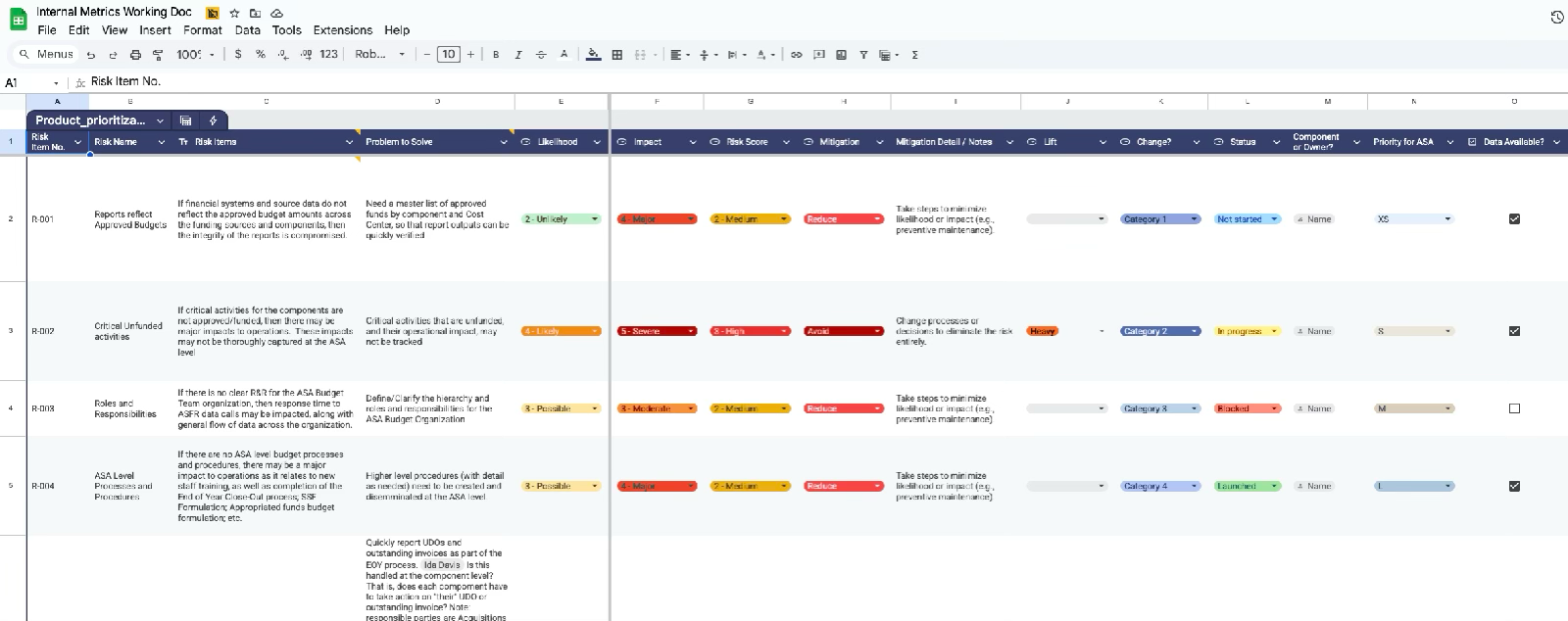
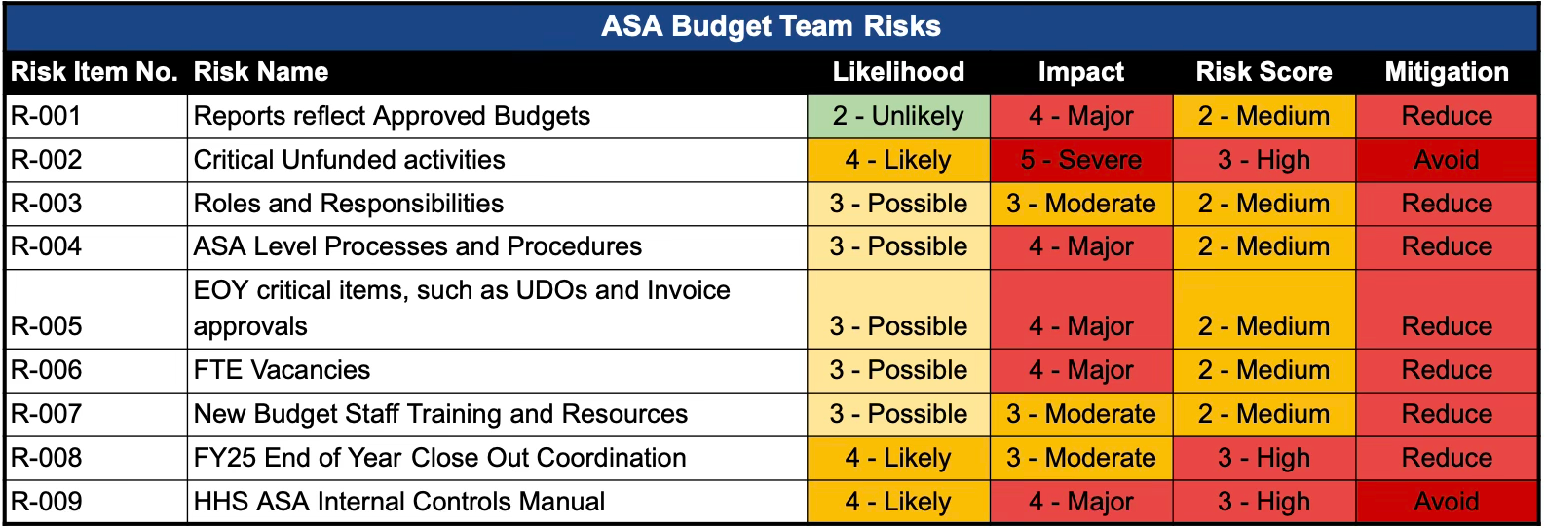
For another HHS ASA project, my team was tasked with helping modernize and streamline the budgeting process. Part of that was helping HHS ASA surface and understand risks, and prioritize possible actions.
Towards this, I worked with another Policy Expert to understand the required processes and potential risks as outlined by the GAO. I was able then to create a spreadsheet (second image) where I, the Policy Expert, and stakeholders could enter, categorize, and tag criticality of potential risks This, in turn, allowed us to create an automated Risk Register (third image) still in use today. This allowed HHS ASA leadership and managers to see, at a glance, what were the most high-priority risks and possible actions for mitigation.
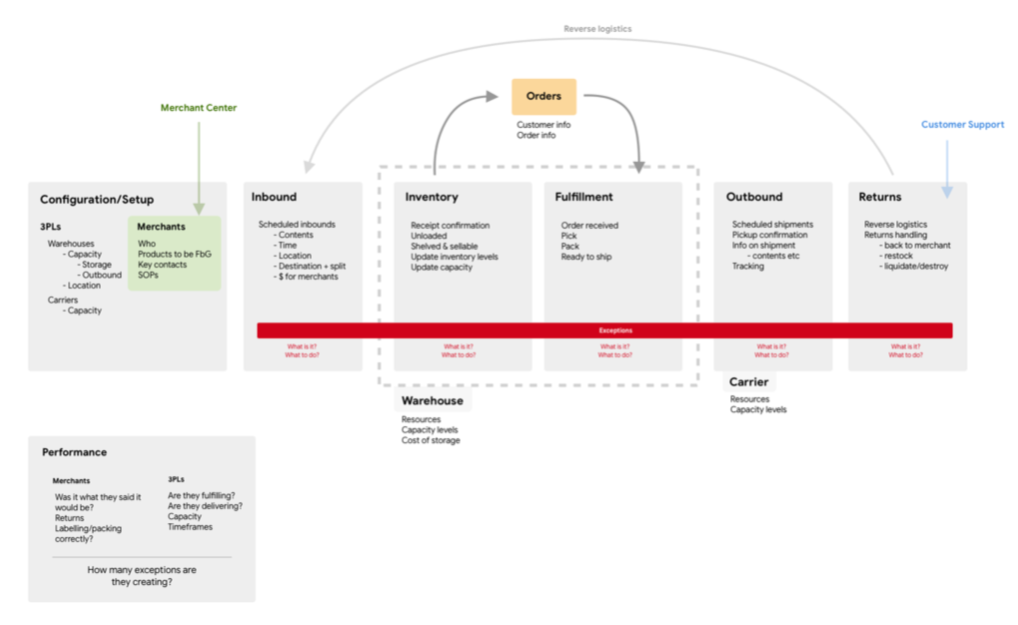
In private industry, when working on an internal tool for Google, I realized that the this tool needed to be able to reach across systems and communications for customers, Google teams, third-party logistics companies, and warehouses. When I spoke with the client about this, they said nobody had mapped out this environment; this resulted in managing it meaning daily calls and emails for every item at every stage of transit.
I and a teammate mapped out the flow of a package through the system (fourth image), and who interacted with it at what point, and what critical communications needed to happen when for success.
This enabled us to simplify the user’s task of tracking and mitigating issues greatly, and allowed us to alert users when an issue might be arising. The result was a hugely reduced daily workload for users, reduced stress, and reduced user error.
Making complex systems visible
In my Service Design practice, I’ve both leveraged my past experience in User Research and worked closely with independent User Researchers to inform my process, work better with participants, and synthesize large amounts of data into actionable insights.
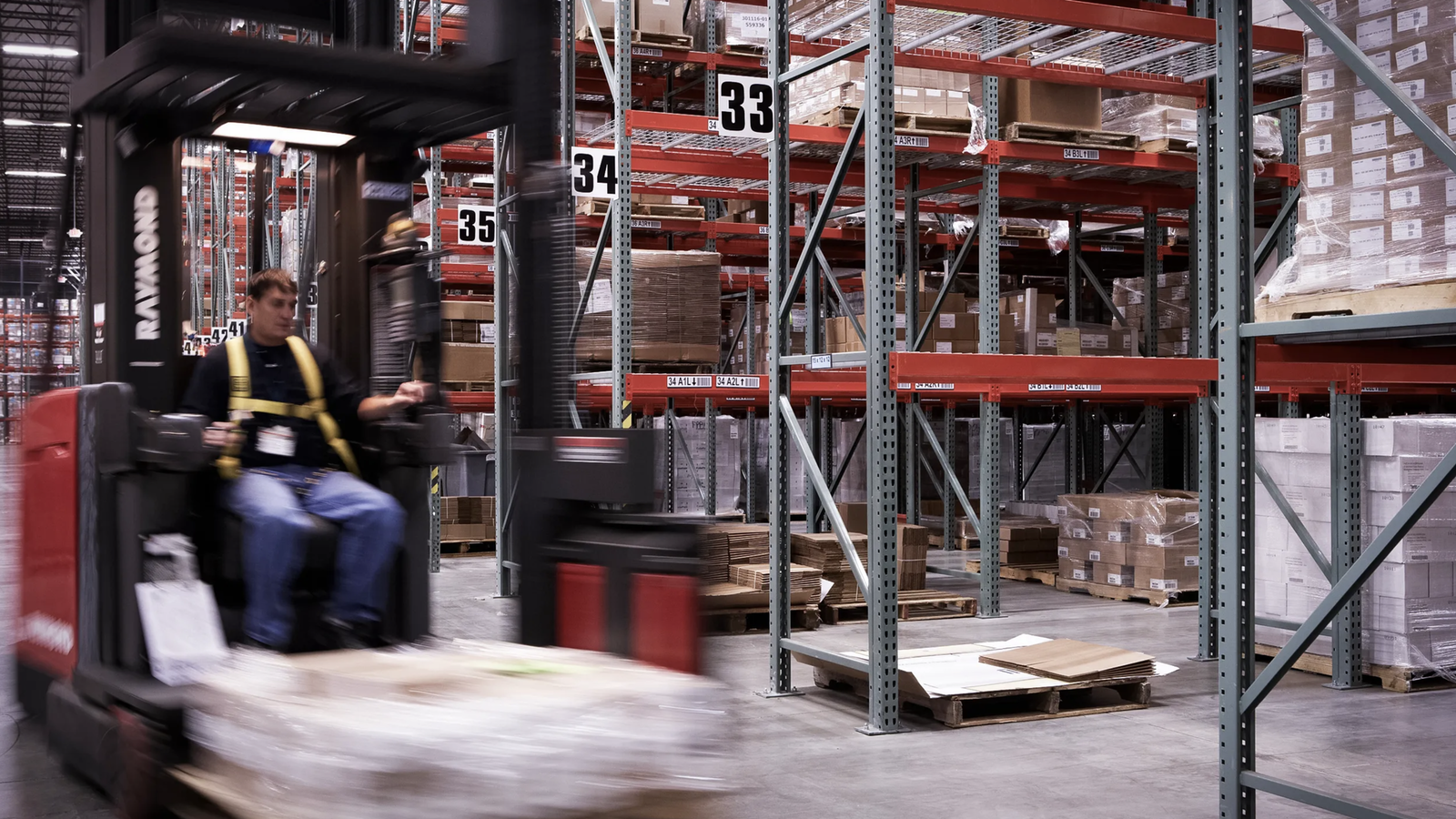
As a Senior Service Designer at AmerisourceBergen, my work was focused on understanding and communicating the hidden and interwoven systems of regulations, logistics companies, local doctors, chain and local pharmacies, and patients who ultimately needed reliable and timely delivery of their prescriptions.
Through a combination of desk research (where my journalism background helped), knowing how to build and communicate user research protocols, listen to real people, and present findings to Senior VPs helped ground my Service Design deliverables in real stories and statistics that helped the company build new Rx services that doctors, retailers, and patients loved.
Incorporating user research